
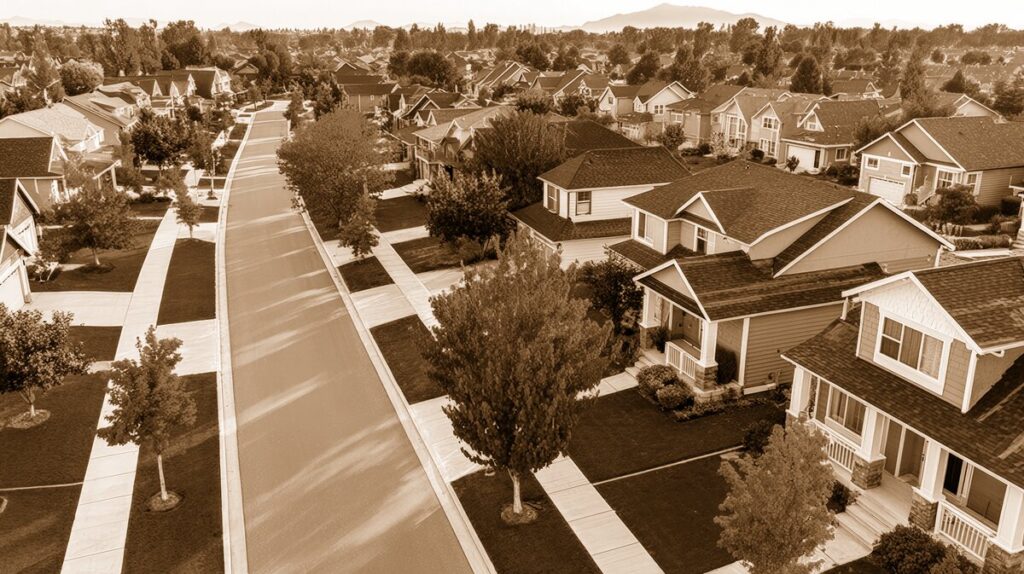
A Neighborhood Within a Neighborhood
Lynwood is one of the smaller residential communities tucked inside Tampa’s larger Bayshore Beautiful neighborhood. Located in South Tampa between Bayshore Boulevard and MacDill Avenue, the area is shaped by a familiar local rhythm: oak-shaded streets, well-kept homes, short walks to the water, and the steady movement of neighbors heading toward the Bayshore sidewalk.
Unlike some Tampa districts with a single, clearly documented founding date, Lynwood developed as part of the broader residential growth of Bayshore Beautiful. Real estate records commonly describe Lynwood as a single-family community with homes dating from the mid-20th century through the present day. Its history, therefore, is best understood as part of the larger story of South Tampa’s transformation from trolley-accessible waterfront and suburban acreage into one of the city’s most established residential areas.
The Early Vision for Bayshore
The roots of Lynwood reach back to the ambitious development vision that created Bayshore Boulevard. In the early 1900s, Tampa developers Alfred Swann and Eugene Holtsinger promoted a residential district known as Suburb Beautiful. Their idea was forward-looking: instead of filling every parcel along the shoreline with private construction, they helped establish a scenic public road beside Hillsborough Bay.
In 1907, Swann and Holtsinger began constructing an early section of seawall, roadway, and electric streetlights. The route initially extended from Swann Avenue to Rome Avenue, and the name “Bayshore Boulevard” appeared in the Tampa City Directory by 1908. Additional seawall and roadway construction followed in 1912, helping connect downtown Tampa with the recreational attractions around Ballast Point.
That original planning decision still defines Lynwood today. Residents may live several blocks inland, but the bay remains close enough to shape daily life. A morning walk along Bayshore Boulevard, a sunset view across the water, or a bicycle ride toward Ballast Point all reflect the same basic promise made by Tampa’s early developers: gracious homes near a beautiful public waterfront.
How Lynwood Got Its Name
The exact origin of the name *Lynwood* is not well documented in publicly available Tampa histories. It does not appear to refer to a prominent Tampa founder, a major civic event, or a nationally recognized historic figure. Instead, it seems to have been used as the name of a residential subdivision or community as South Tampa continued filling in during the postwar era.
The name has a distinctly mid-century suburban character. “Lynwood” may evoke a combination of landscape and domestic comfort—perhaps “wood” for the neighborhood’s mature trees and “lyn,” an old-fashioned variation associated with a ridge, stream, or sheltered place. That interpretation is suggestive rather than proven, but it fits the naming style used for many Tampa subdivisions during the 1950s and 1960s.
What is certain is that Lynwood became a recognized residential pocket within Bayshore Beautiful. City planning records and neighborhood references continue to identify streets such as South Lynwood Avenue as part of the Bayshore Beautiful community.
The Bayfront’s Defining Milestones
Lynwood’s story is inseparable from the major events that shaped Bayshore Boulevard. The Tampa Bay hurricane of October 25, 1921, severely damaged homes, trolley tracks, roads, and seawalls along Hillsborough Bay. Storm surge flooded parts of Bayshore and left sections of the roadway buried under sand. Reconstruction took years, but the boulevard eventually emerged stronger and more substantial.
In 1926, Hillsborough County completed the seawall and balustrade from Howard Avenue to Gandy Boulevard. During the 1930s, Works Progress Administration funding helped widen and pave Bayshore Boulevard with concrete. Landscaping, medians, and improved lighting made it more attractive for motorists as well as pedestrians.
These improvements encouraged continued residential construction farther south. By the middle decades of the 20th century, the blocks west of Bayshore—including the streets around Lynwood—had become a settled neighborhood of detached houses, modest ranch homes, bungalows, and larger residences. The architectural mix tells the story of gradual growth rather than one concentrated building boom.
Streets, Landmarks, and Nearby Institutions
South Lynwood Avenue is the community’s most recognizable street, running through the residential fabric between Bay-to-Bay Boulevard and the southern reaches of Bayshore Beautiful. Nearby streets such as West Bay Villa Avenue, West Lawn Avenue, West Harbor View Avenue, and West Waverly Avenue contribute to the area’s quiet, residential character.
Bayshore Boulevard is Lynwood’s most important landmark. Its waterfront sidewalk stretches for roughly 4.5 miles and is widely recognized as one of the longest continuous sidewalks in the United States. The route remains a daily gathering place for runners, dog walkers, cyclists, strollers, and residents simply enjoying the breeze off Hillsborough Bay.
Ballast Point Park, just south of Lynwood, adds another historic layer. In the late 19th century, trolley service carried Tampa residents toward Ballast Point, where an open-air pavilion, bathhouse, and restaurant made the area a popular destination. The park remains a beloved place for fishing, walking, playground visits, and looking back toward the Tampa skyline.
The neighborhood is also close to several long-standing Tampa institutions. Plant High School, Coleman Middle School, and Roosevelt Elementary School serve as important anchors for many local families, while Bern’s Steak House and the surrounding South Howard and MacDill corridors connect Lynwood to Tampa’s broader dining and cultural life.
Change Without Losing Its Character
Like much of South Tampa, Lynwood has evolved significantly over the decades. Older homes have been renovated, expanded, or replaced by new construction. Mid-century houses now sit beside coastal traditional residences and larger custom homes. Lot sizes, zoning decisions, storm-resilience requirements, and rising demand have all influenced the neighborhood’s appearance.
That change can be seen in current development and zoning activity along South Lynwood Avenue. Recent city records show that properties in the area remain subject to residential planning discussions, reflecting the continuing pressure for thoughtful growth in Bayshore Beautiful.
Yet Lynwood has retained the qualities that made this part of Tampa desirable in the first place: shade trees, walkable blocks, proximity to the bay, and a strong connection to the city’s waterfront heritage. The neighborhood is not defined by a single grand mansion or historic monument. Its character lives in the everyday details—the porch facing a quiet street, the oak canopy overhead, the cyclist turning toward Bayshore, and the familiar route to Ballast Point.
A Lasting Sense of Place
For longtime residents, Lynwood represents a particularly approachable side of Bayshore Beautiful. It has the prestige of a bayfront address without feeling like a formal historic district. Its story is one of layers: early trolley lines, seawalls rebuilt after storms, postwar homes, generations of families, and a new era of carefully designed residences.
The name may not have a famous origin, but Lynwood has earned its place in Tampa’s local geography. Its heritage comes from the larger vision of Bayshore Beautiful—a neighborhood planned around beauty, movement, and public access to the water. Decades later, that vision remains visible every time a neighbor walks toward Bayshore Boulevard and pauses to watch the sun settle over Hillsborough Bay.